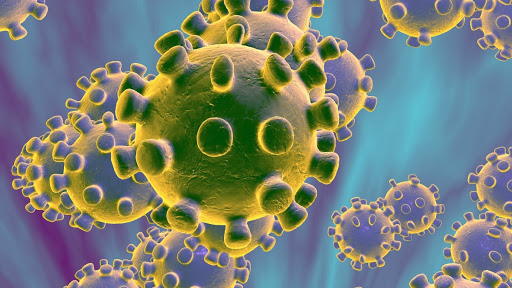
First symptom of corona virus also called as Wuhan corona virus had been found in early 1960’s, along with some deadly virus named severe acute respiratory syndrome(SARS). It usually affects the mammals and birds due to strain of airborne droplets spread by other infected individuals.
In early days four types of corona virus were known- Alpha Coronavirus, Beta Coronavirus, Gamma Coronavirus, Delta Coronavirus. First two can infect only mammals like pigs, bats, etc. Gamma Coronavirus mainly affects birds and Delta Coronavirus affects both mammals and birds. This virus is spreading at much faster rate than it should be realized of being infected among the individual. It is reported that Corona virus is spreading at 3 times faster rate than SARS.
Wuhan coronavirus was first identified in the Chinese city of Wuhan in 2019. At the time of writing, numbers of infected are still on the rise, with a mortality rate of around 1 percent. Snakes were firstly found affected by this virus.
Comparisons have been drawn between the pneumonia caused by the new virus and that induced by SARS, which infected more than 8000 people during a global outbreak that began in 2003. The viruses are from the same family, and both can cause fever and pneumonia.
So far, the new virus seems to have a lower fatality rate. Based on the number of reported cases and deaths, the rate seems to be about 2.8 per cent, compared with a 9.6 per cent rate for SARS. But it is too soon to be sure just how dangerous the virus is. We are still in the early days of the outbreak.
There is also a chance that the virus could mutate to become more contagious or deadly. However, there is no evidence yet that the virus has mutated within people, and the World Health Organization (WHO) told a press conference last week that the virus appears to be stable.
If the virus is able to spread before symptoms show, that could explain why it is spreading so quickly.
It has the potential to reduce more than 31 gigatons of carbon dioxide, that’s more than three times possible with the use of Electric cars.
You might be wondering what the hell on this planet is this silvopasture that has such a significant impact on reversing climate change.
Well! let me make it simple for you.
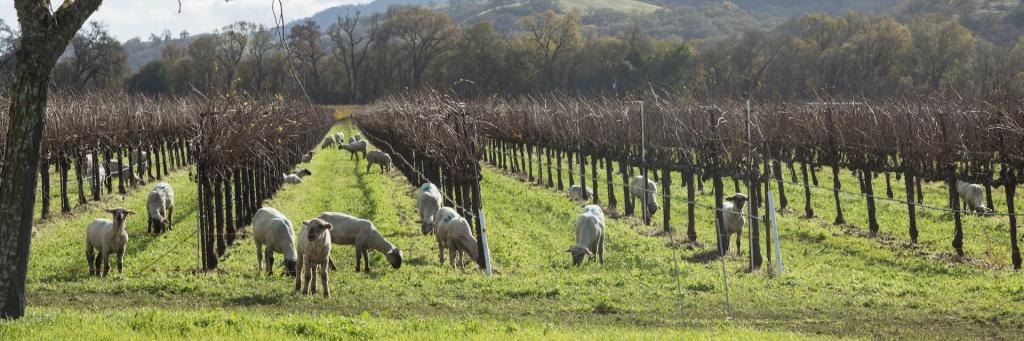
Silvopasture is the ancient practice of raising Trees, Animals, and Pasture(grasses) on the same field, a form of land that is commonly forested in parts of the world. It might sound like a form of agroforestry but they’re different because they integrate trees and animals on the same piece of land. How it works is that trees provide shade to animals and also low-hanging fruits for them, meanwhile, animals provide them with the required fertilizer, and also their grazing helps tree growth as a form of pruning.
It is practiced in some parts of the world like dehesa(grassland) system in southern Spain where pigs graze on the grass and are surrounded by trees. A similar system is practiced in Southern Portugal. Another example of this silvopasture includes Espinal of Central Chile and the Galajars of Iran. Across Pacific islands, they have cultured this for millennia to produce an abundance of food on a small piece of land. In Panama and Columbia, silvopasture is helping reverse the damaging history of poorly managed cattle ranching by Spanish settlers. Countless smallholder systems shaped ancient agricultural practices and persist today with little documentation because dryland climate animals require shelter to survive hot weather.
Many have documented the numerous benefits of silvopasture, including improved biological diversity, improved water quality, reduced soil erosion, improved soil-water holding capacity, and enhanced pest management. But this is nothing in front of sequestering carbon. Soil carbon is primarily built up through carbon-rich substances released by plant roots, which explains why a farming system that includes trees can be a climate win.
This agricultural practice was the ninth most carbon emissions-reducing solution ahead of rooftop solar panels, electric cars, and any other agricultural practices on the list generated by some researchers. It has the potential to reduce more than 31 gigatons of carbon dioxide that’s more than three times the reduction possible with the help of the use of electric cars. But still, this practice is so rare that we hardly ever heard of this practice.
In 2012 US Department of Agriculture asked farmers whether they are practicing silvopasture and similar practices. Just 2,725 out of 2.1 million farmers reported using silvopasture. This practice is so rare that farmers need to travel out of state to find a single example.
What is possible is restoring the relationships – among plants, animals, and people – that not only rebalance the climate cycle but more deeply tie us to places and the people with whom we share them. Instead of looking to static models of how to farm sustainably, we have to deepen our dialogues with the plants and animals in this boat with us and focus more on dynamic principles rather than prescriptive practices. When animals are integrated into cropping systems, instead of cooped up in factory farms, their manure becomes healthy soil, not just methane emissions.
Plato’s allegory of the cave is quite vivid and serves as an important example. This is what this eye-opening allegory can teach us today.
But before we discuss Plato’s allegory of the cave, let’s talk about this great philosopher first. Plato (Greek: Πλάτων, 427. BC. – 347. BC.) was a Greek philosopher from Athens who is considered as one of the most influential people in the history of western civilization.
He was Socrates’ student. Thanks to Plato, we have a significant source of information about Socrates. Plato founded the first institution of its kind – the Academy. Aristotle was a student of that academy.
Plato’s best-known work is “The Republic” – a book in which he wrote about a utopian image of an ideal society that would be ideally run by philosophers. Plato left a lasting mark on the development of many minds that came after him. He is one of the most influential figures in the course of the development of modern western society.
Plato’s Allegory of the Cave
Plato once demonstrated his knowledge with his so-called allegory of the cave. It is found in the seventh book of dialogue in “The Republic”. It is quite vivid and serves as an important example.
He invites us to imagine a cave. In it, there are people who have been chained and are unable to turn to any other direction except for the inner wall they are facing. Because of the chains, they cannot see anyone besides themselves nor can they see the cave’s exit, which is directly behind their back. The only source of light in the cave is a campfire.
Between people and the fire, there is a cover behind which there are other people that go about on their own business. They are walking past, carrying stone and wooden statues of men and animals, etc. The chained ones are observing a blank wall and can see, because of the fire, the shadows of themselves and of that which is happening behind them.
As they are walking by, some of the people behind the cover are talking to each other while others are silent. The voices echo in the cave while the shadows dance on the wall. This makes it appear to the chained ones as if the shadows are real and talking.
Those in chains have no other things to do except for talking about the shadows. So they try to guess which shadows shall past next and in what order. Those that are the best at guessing are granted with honors and get more acclaim than the others.
Plato compares us to those who are chained to the cave wall in his metaphor.
He points out that we believe and think we see reality by watching the shadows on the wall.
He states that we should consider the possibility of releasing one of those in chains to stand up and turn to face the light from the exit of the cave. The sunlight would cause great pain to this person as he or she would be used only to darkness. Thus, no clear vision would be possible. If he or she got used to the light and saw what was really happening behind the cover in the cave, a revelation of the delusion would occur. Enlightenment.
Plato’s Allegory of the Cave and Its Meaning
Plato’s allegory of the cave serves its purpose to represent the life of an individual. A life of learning and knowing by using our senses and entrapment and obsessiveness with the body and all things material. Exiting the cavemeans the soul’s rising into a world of ideas. One can accomplish this by learning with reason and a mind clear of delusions.
Plato concludes the allegory of the cave by asking the question of what would happen to the one who got out of the cave and had observed the Sun. What would ensue if he or she tried to explain to the chained ones what was really happening – what the real truth was?
The revelation would seem impossible to the others and they would declare the “enlightened one” to be mad. Even if this person attempted to release them and take them out of the cave, it would only lead to the demise of the “enlightened one”. Plato used this metaphor to allude to the fate of his mentor Socrates who was charged and executed by the Athenians.
Now, let us approach this topic from another point of view – a 21st century one at that.
Does Plato’s Allegory of the Cave Remain Relevant in Our Times?
Yes, of course, it does. “What has been will be again, what has been done will be done again; there is nothing new under the sun.” – Solomon
The question you should be asking is whether you are the one in chains or the one who “sees” matters for what they truly are. Or even still, if you are chained to the wall in front of you to revel in the glorious shadows for an entire lifetime – would you know it? There is another question – would you want to change it? Would you have the courage to make that audacious step to come out of your comfort zone?
For the brave and the bold, there is always a way out of the cave.
It isn’t as simple as taking the red pill, as Neo did in the movie Matrix, unfortunately. It is a challenging process of change and self-improvement for every individual. Through hours spent on finding, learning, validating, and putting the newfound knowledge into practical use. All knowledge is useless if it is not being used for a persistent and purposeful practice.
The first step is self-assessment. Seeing and accepting all the faults and issues of one’s character. Detachment and the perseverance to abstain from the creed for the material things is the second step. The third is a humble and gentle perspective towards all the life’s creatures and occurrences. Nobility appears as a consequence. The fourth step is to love each and every moment of existence and all that makes that moment unique.
The fifth step – I’ll leave it for you to find it out for yourself…
In terms of making meaningful and authentic decisions, we are a species walking a narrow bridge with two chasms framing our way: the finite and the infinite. On the finite side lie the fixed conditions of everything we are. These are the facts of our existence that force us to live in certain ways: the needs of our body, the wiring of our brain, and the pull and push of necessity. On the infinite side lies a universe of potential — all the things we think we might someday do or become, a future full of possibilities with no set course laid out.
Both sides have their sirens’ calls that beckon us with promises of comfort, and both risk rendering us unable to move forward authentically in our lives. For the Danish philosopher Soren Kierkegaard, the wise but hard task of life is to walk the path between these two abysses: to be neither finite nor infinite but find the middle way.
Becoming a cipher Right now, you have innumerable desires, cravings, worries, phobias, or dreams tugging you this way and that. For most of your life, you’ll give in to them. You’ll scratch an itch, drink some water, smile at a good-looking girl, go to bed, nurse a wasp sting, and so on. In these moments, you live in the finitude of your existence — the reality and necessity of life.
For many people, this is all there is: a world that Kierkegaard calls “aesthetic.” The problem is that if we live only for our needs and whims, then life will rattle by without anything bigger. When we live only for the aesthetic, and embrace too fully the finite alone, we risk losing ourselves. We can do this in two ways. One is to become a slave to our desires — a kind of hedonistic automaton. Another is to become a faceless, uninteresting drone among the masses — or, as Kierkegaard put it, “like the others, to become an imitation, a number, a cipher in the crowd.”
For example, take the person who identifies so fervently and obsessively with some hobby, profession, or role. It could be the Good Father, the Pious Worshipper, the Patriot, and so on. Everything they do in life is subject to this prefabricated identity they wear, and their every action must satisfy a social-facing role. The Pious Worshipper must never tell a ribald joke. The Patriot must never insult her country. The Good Father can never shout and complain about his irrepressibly loud toddler. These people must fit into a group, a family, or crowd, because that is where they think they will find themselves. They think that doing so is what it means to be a person. But to surrender to the labels of the “finite” is to surrender the complicated capacity you have to reinvent yourself all of the time. When the finite is all that you live for, you cease to exist as a self. You become a leaf to be blown or a pawn to be moved.
Gawping at possibility Kierkegaard believed that the finite is not all there is to being human. There is also the infinite — the recognition that we have the capacity to choose and direct our lives in essentially any way we can dream. But spending too much time gawping at the cosmos of possibilities we face is not entirely healthy. For a lot of people, it’s terrifying.
Most of us can remember the anxious vertigo that comes in those “infinite” moments of life, when you leave your parents’ home, end a relationship, or stare at the blank first page of a novel. To know the infinite is also to be dreadfully aware of the vastness of the future. In a phrase Kierkegaard made famous (philosophically famous, anyway), this is to experience and know the “dizziness of freedom.”
For many people, the anxiety and panic that comes from confronting the vast potential of life is crippling. There’s a paralysis that comes in being unable to choose, because there are too many choices to make, and too many potential options to choose from. For so much of our lives we’re led by the hand by those around us, or we’re given easy and impulsive answers from our biology. However, a human is someone who can take stock of things and who can — who has to — make decisions that no one else will make.
Many will lose themselves in the anxiety of just how momentous these choices are. They see how far their decisions will affect everyone around them and they know that you can only choose a path once. Many people will swim too long in the infinite, and, before long, they drown.
The narrow bridge There is great danger on either side of our walk. We risk losing everything that makes us an individual: a being with choice and freedom. But we also risk never committing to life, through putting off our decisions or denying our capacity to choose. We must take a step along that narrow bridge between the infinite and finite. After all, like a spinning top, we risk toppling and losing our very selves when we stop moving.
Kierkegaard’s advice is that we must each “learn to be anxious.” We must take a stand where we will but get used to facing outward. There’s a paradox in all this (and Kierkegaard is particularly fond of paradoxes) and we must hold two seemingly contradictory beliefs in tandem, while never giving sway to either.
We must recognize that we are puny and insignificant — primates running on hormones and synapses. But we must also recognize that we are powerful beyond belief, that each of our decisions reaches out into the future, and that our decisions define our future. Embracing and living with this paradox is a maturing of the soul and it is a necessary step in becoming a human being. As Kierkegaard wrote, “I will say that this is an adventure that every human being must go through.” We all live in contradiction. Wisdom comes in accepting that.
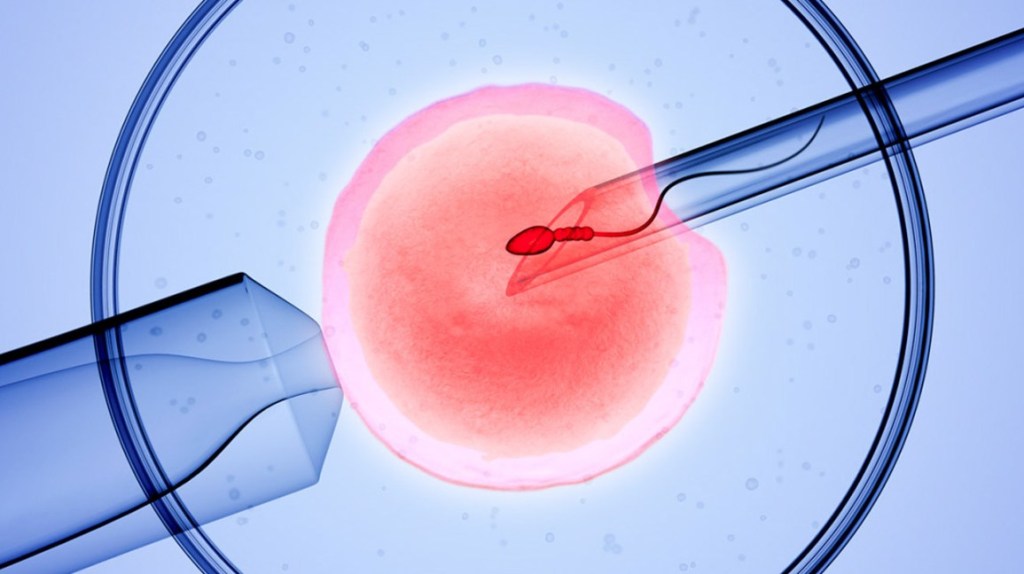
In vitro fertilization(IVF) is a fertilization process takes place outside the human body(usually “in glass”) where the female egg is combined with a male sperm.
Basically there are so many myths about the in-vitro-fertilization(IVF) among the society that they believe is true but actually it’s not. In this article we are going to see some myths about IVF in India.
#myth-1 IVF is not a safe practice:-
It is said by so many people that IVF is not safe but actually due to latest technologies and well trained doctors it is possible to perform IVF successfully.
#myth-2 IVF babies are born with birth defects:-
Chances of babies born through IVF process is normally low. They are like as the other child in the world.
#myth-3 IVF leads to multiple pregnancy:-
No, this is completely wrong to say that IVF leads to multiple pregnancy. But yes, there is some risk that if number of embroys transferred are more.
#myth-4 IVF is costly for middle class people’s:-
Yes, it is bit costly but it is wrong to say that middle class people can’t afford it. But nowadays it is affordable for nearly everyone.
#myth-5: IVF raises cancer risks:-
It is one of common misconception among the people that IVF process creates more risks of cancer. Truth is that IVF didn’t have any risk of cancer.
#myth-6 IVF treatment needs to be admitted in hospitals:-
It is a fertilization process that takes place in glass where( egg and sperm are combined), so you need not to be admitted for so many days in hospital.

 TECH and LIFE STYLE